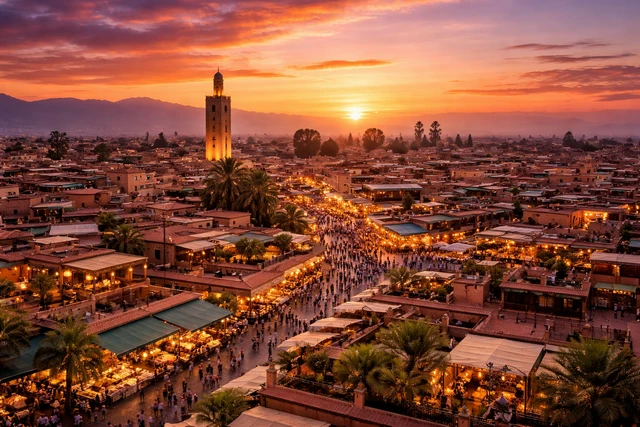


The Souks of Marrakech: an immersion into the heart of Moroccan craftsmanship
The souks of Marrakech are among the most iconic experiences to enjoy in the Red City. As soon as you step into the medina, something changes. The atmosphere becomes denser, more vibrant, more sensory. The alleys narrow, the colors multiply, and the scents of spices mingle with leather, wood, mint tea, and handmade products. Visiting the souks of Marrakech is not simply about shopping. It is about discovering the commercial, artistic, and cultural soul of the city.
For centuries, the souks have formed a true economic and human center. They are far more than a traditional market. They create a network of alleys, passages, small squares, workshops, and stalls where locals, travelers, artisans, merchants, and design lovers all meet. Every lane has its own rhythm, identity, specialty, and atmosphere. Here, you find everyday objects, refined creations, unique pieces, raw materials, and skills passed down from generation to generation.
The souks of Marrakech appeal both to first-time visitors and to returning travelers who enjoy coming back again and again. They are fascinating because they offer a complete experience. You do not simply look at products. You observe gestures, listen to conversations, touch materials, learn how to negotiate, and discover the history of Moroccan trade and the importance of craftsmanship in local culture. It is a living, deeply human place where tradition continues to exist in the present.
Why are the souks of Marrakech so famous?
The souks of Marrakech are famous for several reasons. First, they represent one of the best-known traditional market networks in Morocco. Second, they are deeply tied to the medina, its history, and its identity. Third, they offer an extraordinary visual and cultural richness.
In the souks of Marrakech, everything seems to tell a story. A chiseled copper lamp reflects the patient work of the artisan. A Berber carpet carries symbolic motifs transmitted over generations. A carved wooden box, a hand-hammered tray, a pair of leather slippers, an embroidered textile, or a painted ceramic bowl all become signs of a deeply rooted know-how. The souks have preserved something rare: they remain useful, authentic, and lively spaces while also becoming a must-see destination for visitors from all over the world.
Their reputation also comes from the atmosphere they create. There is a unique energy in the souks of Marrakech. They do not feel like a shopping mall or a standardized modern market. They keep a direct connection to materials, gestures, speech, and human relationships. That is what makes them so memorable.
How are the souks of Marrakech organized?
The souks of Marrakech have historically been organized by trade and specialty. That old logic is still visible today, even if the boundaries between sections are now sometimes more flexible than before. Some areas are known for leather, others for spices, textiles, carpets, jewelry, metalwork, wood, lanterns, traditional cosmetics, or decorative pieces.
This organization gives the journey great richness. You move from one atmosphere to another within minutes. A lane filled with spice aromas may suddenly open onto an area dominated by brightly colored fabrics. A little farther on, you may discover a district where artisans work metal in front of passersby. Elsewhere, shops display baskets, cushions, carpets, and decorative objects meant both for Moroccan homes and for travelers looking for elegant souvenirs.
Walking through the souks of Marrakech also means learning to read materials, identify styles, distinguish artisanal techniques, and observe the logic of traditional trade.
A unique sensory experience in the medina
The souks of Marrakech first impress through their sensory power. The eyes are constantly engaged. The terracotta tones of the medina, colorful pigments, hanging fabrics, stacked carpets, mosaics, golden lanterns, and carefully arranged or overflowing stalls create a spectacular setting.
Smell plays an equally important role. Cumin, cinnamon, ginger, saffron, orange blossom, musk, amber, black soap, leather, and fresh mint create an immediately recognizable olfactory identity. This sensory signature is part of the charm of the souks.
Sound also fully shapes the experience. You hear bargaining voices, greetings, laughter, hammers on metal, footsteps in narrow alleys, and the distant sounds of the medina. All of this makes the souks of Marrakech feel vibrant and immersive.
Touch matters too. In the souks, you feel soft leather, thick wool, polished wood, pottery, embroidered fabrics, and woven baskets. Nothing is abstract. The market is discovered through the whole body.
Iconic products found in the souks of Marrakech
The souks of Marrakech are known for the diversity and quality of their products. Among the most sought-after items are Moroccan rugs. They come in a wide range of styles, sizes, colors, and techniques. Some are highly graphic, others more traditional, some minimal, others extremely detailed. They appeal both to lovers of modern interiors and to admirers of traditional craftsmanship.
Handmade lanterns and lighting pieces also occupy a central place. Worked, pierced, or engraved metal creates patterns of light that instantly evoke Moroccan aesthetics. Trays, mirrors, door handles, boxes, and small decorative metal objects belong to the same rich universe.
Leather goods are very present in the souks of Marrakech. Slippers, bags, pouches, belts, poufs, and many other accessories attract numerous visitors. Leather remains one of the most emblematic materials of Moroccan craftsmanship.
Spices also hold a major place. They color the stalls and remind visitors of the strong relationship between food, trade, and culture. Many travelers enjoy taking home fragrant blends, cumin, paprika, cinnamon, ras el hanout, or saffron.
Pottery and ceramics are another major specialty. Plates, bowls, cups, serving dishes, vases, decorative tiles, and colorful objects enrich homes and extend Moroccan aesthetics long after the trip has ended.
The artisans, living wealth of the souks of Marrakech
One of the greatest treasures of the souks of Marrakech lies in the presence of artisans. They are the ones who give the place its depth and authenticity. Without them, the souks would simply be a market. Thanks to them, they become a space of cultural transmission.
Watching an artisan cut leather, weave, paint, hammer, carve, or assemble an object completely changes the way one sees what is being bought. The object is no longer anonymous. It becomes the result of time, skill, and sensitivity.
The souks of Marrakech help visitors understand the value of manual work and the central role of craftsmanship in the local economy. Many workshops remain modest in size but immense in the quality of the gesture. This closeness to production is one of the great privileges of the visit.
How should you visit the souks of Marrakech?
There is no single way to explore the souks of Marrakech. Some visitors prefer to go with a guide in order to understand the organization, the trades, and the history of the place. Others choose complete freedom and simply let themselves drift through the alleys. Both approaches have their charm.
For a first visit, it can be helpful to begin from Jemaa el-Fna square and then gradually enter the maze of the souks. This offers a natural transition between the city’s great symbolic square and the more intimate world of artisanal trade.
It is best to take your time. The souks of Marrakech are not meant to be rushed. The slower you move, the more details you notice. The more you observe, the more you understand the nuances between products, styles, districts, and atmospheres.
The art of bargaining in the souks of Marrakech
Bargaining is part of the experience in the souks of Marrakech. It should not be seen as a confrontation, but as a cultural exchange. People discuss, smile, compare, and take their time. Negotiation is part of the human relationship between seller and buyer.
It is generally recommended to remain respectful, patient, and relaxed. It is often better not to show too much enthusiasm immediately for a specific object, to compare several shops, and to remember that the experience matters as much as the final price. Bargaining with elegance and good humor often turns into an enjoyable moment while helping you reach a more balanced price.
The souks of Marrakech and interior design
The souks of Marrakech are an endless source of inspiration for interior design lovers. They provide ideas, materials, colors, and objects to create a warm, bohemian, refined, or oriental atmosphere.
You will find cushions, carpets, lanterns, baskets, mirrors, trays, ceramics, poufs, and fabrics that fit beautifully into many different home styles. This decorative appeal contributes greatly to the international reputation of the souks.
Practical tips for enjoying the souks of Marrakech
Wear comfortable shoes, since visiting the souks means a lot of walking. Avoid trying to see everything at once. Allow time for breaks. Keep an eye on your orientation if you are not with a guide. Take time to enter smaller, less crowded alleys, where some of the most beautiful discoveries are often hidden. Stay open to encounters and conversation.
Why do the souks of Marrakech remain an essential experience?
The souks of Marrakech remain essential because they represent one of the city’s strongest expressions. They bring together trade, craftsmanship, culture, materials, speech, and the pleasure of discovery. They allow visitors to understand Marrakech through what it produces, exchanges, displays, and transmits.
Visiting the souks of Marrakech means living an experience deeply rooted in reality, far from impersonal spaces. It means seeing the city at human scale. It means feeling that past and present continue to dialogue there every day.
Conclusion
The souks of Marrakech are not just a place to visit, but a world to explore. They offer a rare immersion into Moroccan craftsmanship, the medina, and the authentic energy of the city. Whether you are searching for a souvenir, a beautiful decorative piece, a photographic moment, or simply an intense experience, the souks of Marrakech always leave a lasting impression. They are the living reflection of a city where tradition continues to reinvent itself every day.